

What you can expect


What others say about me
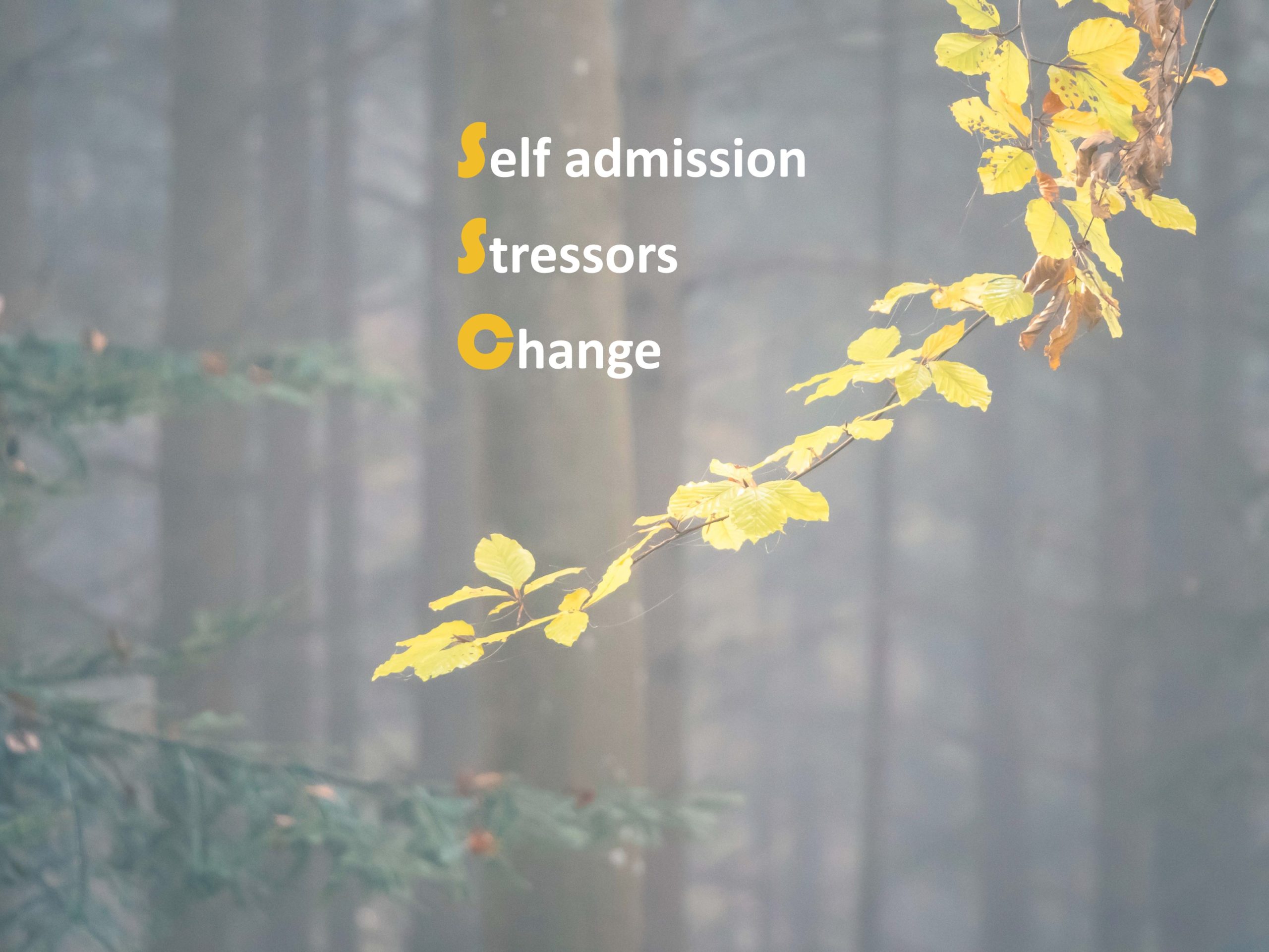
The STRONG Model
With the STRONG model, you can take your life into your own hands and make yourself fit for life’s adventures!
You can find out more about the STRONG model here:Burnout prevention – A 5 Step plan

What I offer you
Why I became a Life Coach
You’re wondering what prompted me to become a life coach? After all, I have a full-time job?! Then you’ll find out here how I came to have a second job.
My story in 3 chapters:
- One door closes and another opens
- The realization
- The maturing process
Here are some posts on burnout

The 3 phases of burnout and burnout symptoms
The 3 phases of burnout and burnout symptoms In the WHO description, the [...]

Is burn-out just a trend?
Is burn-out just a trend? Here I would like to take the answer [...]

Mental stress in the workplace: action required!
Mental stress in the workplace: action required! A closer [...]
Here are some of my personal learnings
Saying no is not that hard
l learned that saying no is not that hard not on an easy route, [...]
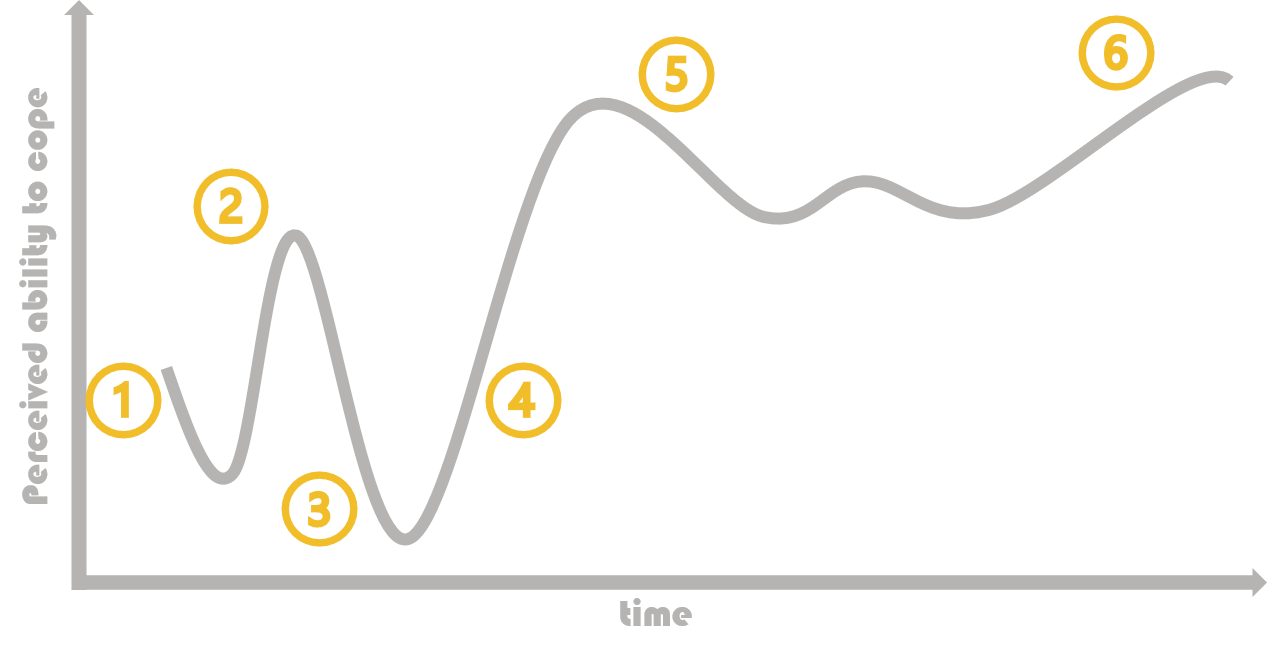
Forced to change
The six phases of change, at which stage are you? I was sitting [...]

Buckets – to cope not to judge
Enlarge your buckets or at least drill holes in them. I had this [...]
What you always wanted to know about online Life Coaching
Here, one can particularly highlight 3 groups of people. What all three groups have in common is that they are people who are highly self-motivated and want to achieve a lot on their own initiative. Only the motives are different.
Group 1: Perfectionists
In this group we find people who are very ambitious and committed to the tasks assigned to them and who want to get it right down to the last dot.
Group 2: Performance-oriented people
This group consists of very determined, dynamic people. They like to exert themselves and often enjoy doing so. However, if there is a lack of recognition from outside or if there are failures, this situation can become very stressful. This group also needs a certain amount of freedom to pursue their goals and needs a high degree of self-responsibility.
Group 3: Selfless people
This group approaches things with a lot of idealism. They are often selfless and responsible. They care about the welfare of others above all else. We usually find them in social professions.
These groups certainly do not describe all unambiguously and there are certainly also affected and endangered who have a mixture of the described characteristics, but should also only give an impression.
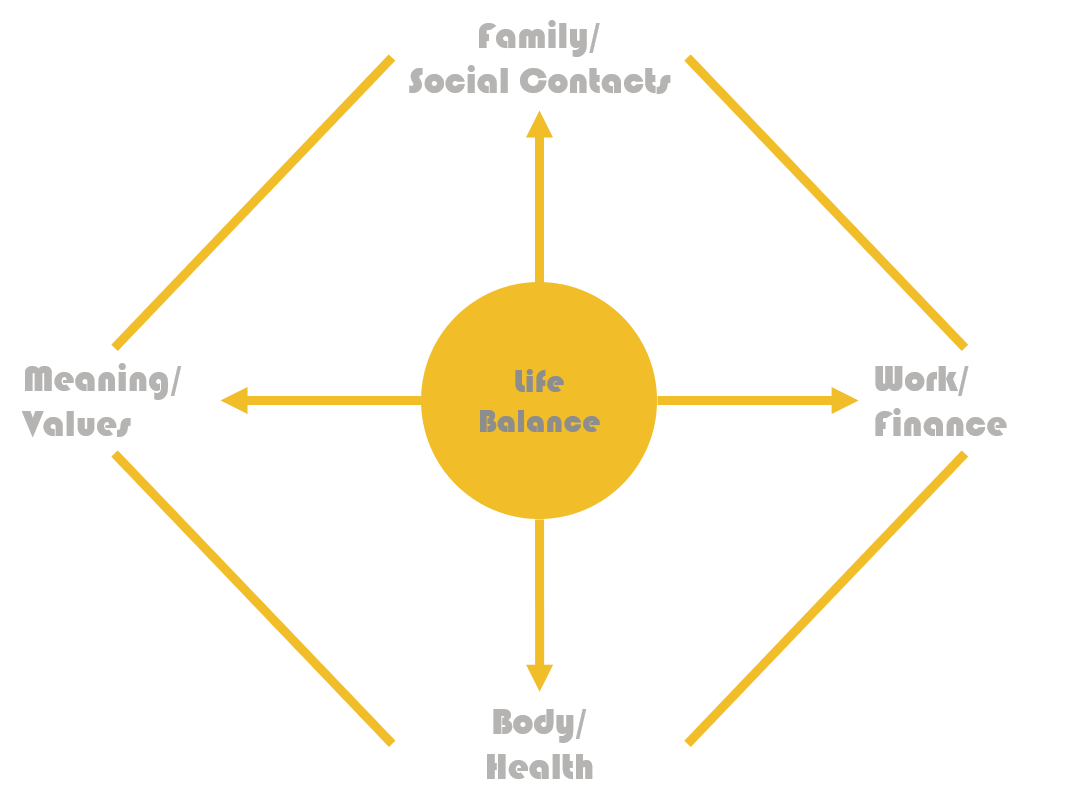
Life Balance
There is a lot of talk concerning finding your life balance. There is also more than one live balance model out there, but the one I like is from Nossrat Peseschkian.
Learn more
Well, I just love to travel! Also, if you travel with an open mind there are so many things you can learn from the culture of other countries and you will find, that some of my methods are inspired from my travel.
Or you are interested in going to South America or just want to get some impressions. You can do this on my Travel blog. You fill find information about Bolivia, Chile, Columbia, Peru and other countries I have visited. Unfortunately, I only started writing this blog after having seen already some very nice counties of this part of the world, but I try adding more countries along the way.
In my point of view Life Coaching is all about your challenges in life. Whether to balance your life the way it is good for you, coping with stress or facing changes – these are all topics I am happy to support you with!